Parking Lot Striping in Concord, NC
Commercial lot striping, sealcoating and markings for properties in Concord, NC.
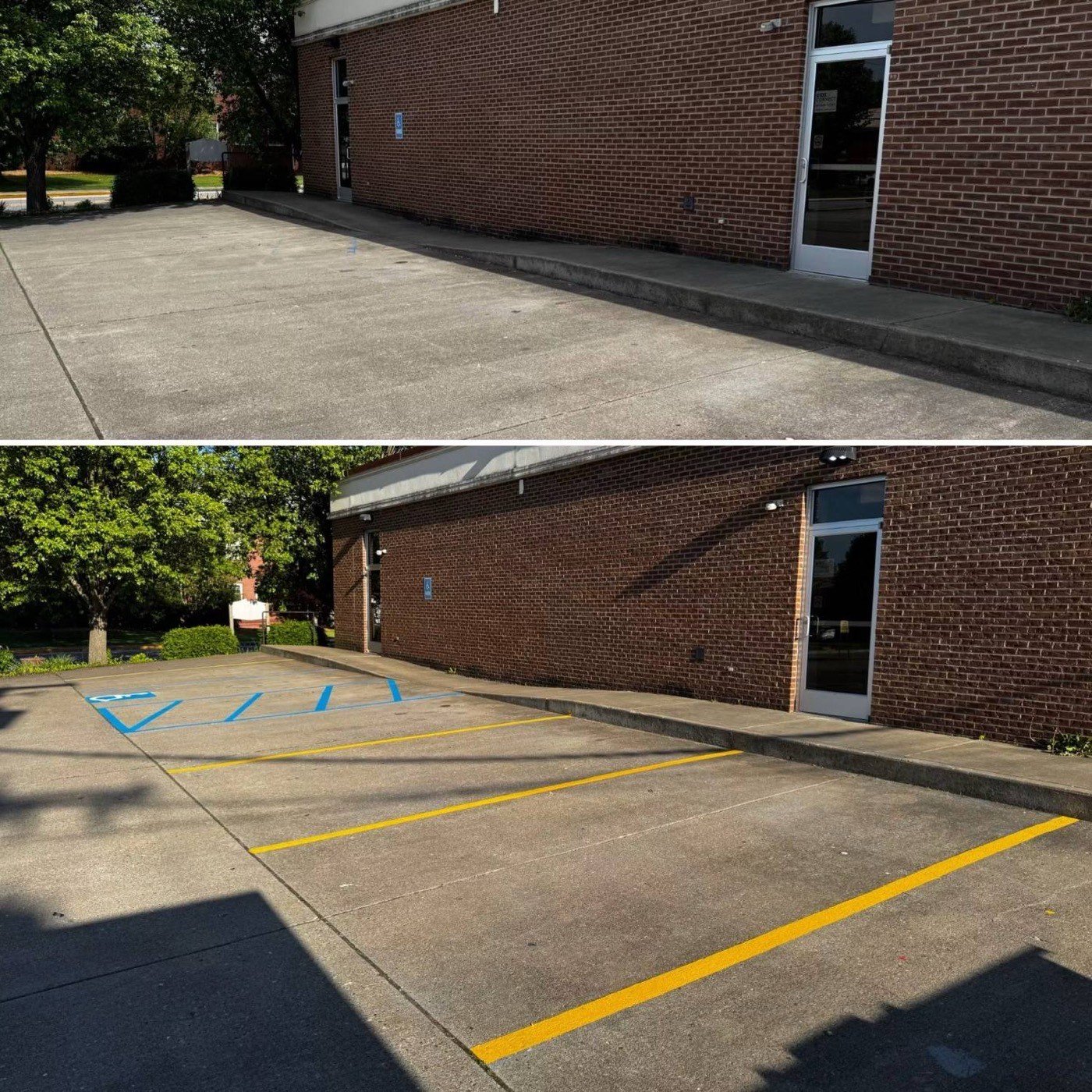
- Full re-stripes and fresh layouts measured out, not copied off faded lines
- Sealcoating and crack filling in the right order, so the work lasts
- Accessible spaces and access aisles marked to the federal standard
- Night and weekend scheduling for lots that cannot close
Price my lot
Property type and rough stall count is enough, most lots are priced without a site visit.
What we do in Concord, NC
- Parking Lot Striping in Concord, NC
Re-stripes and new layouts for commercial lots, stalls, arrows, crosswalks, fire lanes and loading zones.
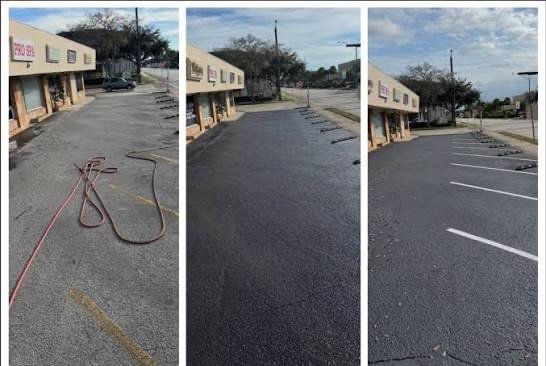
- Parking Lot Sealcoating in Concord, NC
Sealer over prepared asphalt to slow oxidation and water getting into the surface, then a fresh re-stripe once it cures.
- Asphalt Crack Filling in Concord, NC
Routing and hot-pour filling of working cracks, before water gets underneath and takes the base with it.
- Pavement Marking in Concord, NC
Traffic-grade paint and thermoplastic for the markings that direct people around your site.
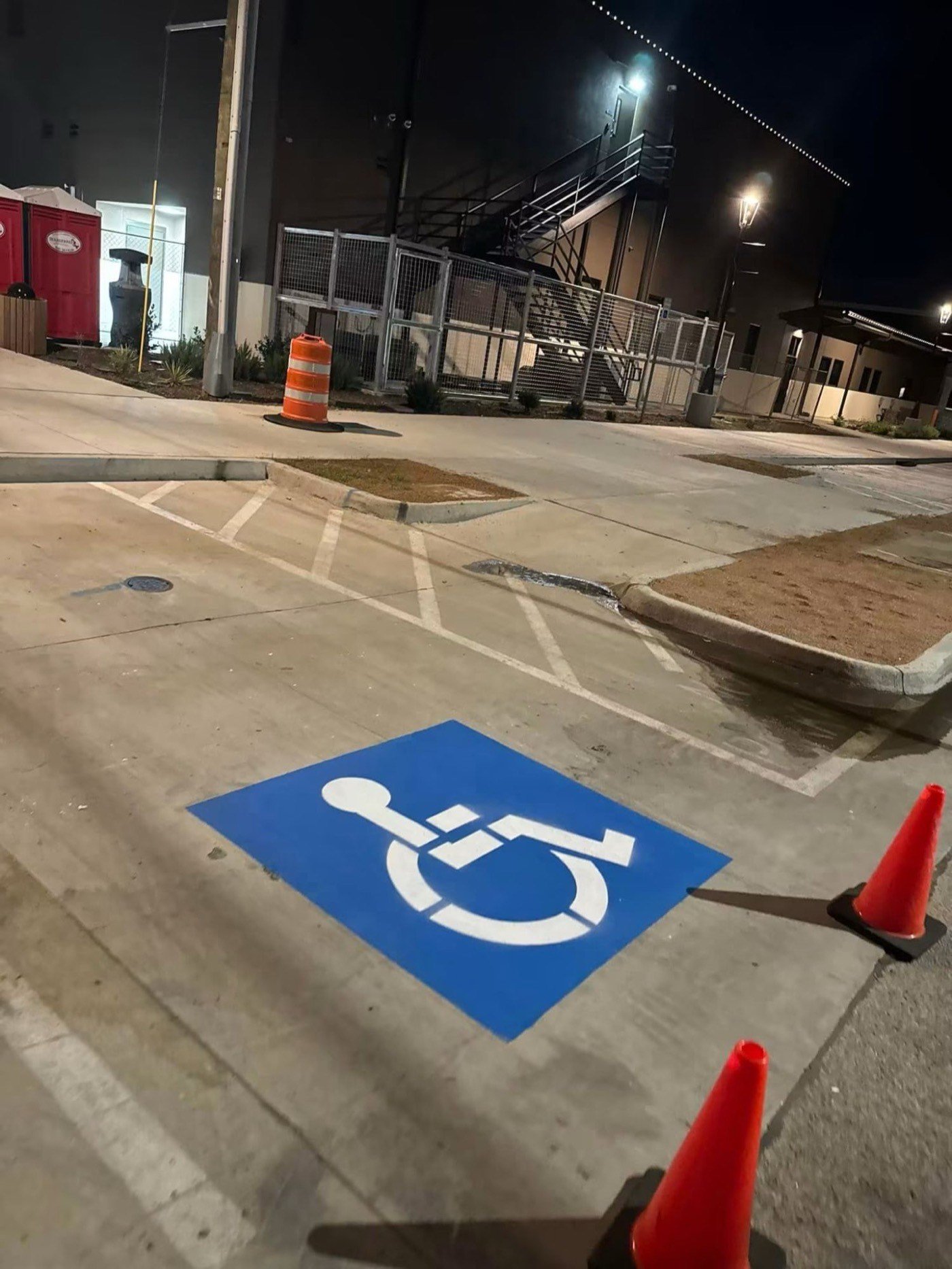
- ADA Compliance Striping in Concord, NC
Accessible stalls, access aisles and van spaces marked out to current standards, the markings most often flagged on a lot.
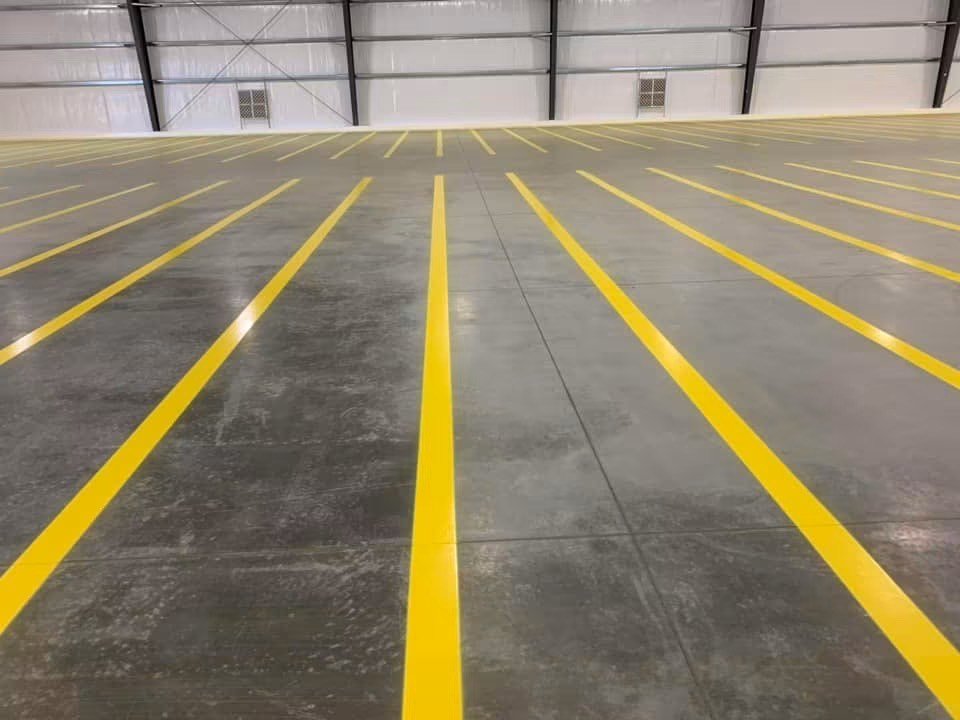
- Warehouse Floor Marking in Concord, NC
Interior marking for aisles, racking bays, walkways and hazard zones, so forklifts and people keep to their own space.
Working in Concord, NC
Concord is the county seat of Cabarrus County and, at 105,240 people in 2020, the second-largest city in the Charlotte metro after Charlotte itself. It is the biggest market on this list by a wide margin.
About Concord, NC: County seat of Cabarrus County. Population 105,240 at the 2020 census, the second-most populous city in the Charlotte metropolitan area and tenth-most populous in North Carolina.
What shapes the work in Concord
Scale changes the job rather than just the price. A city this size carries large-format retail, distribution and industrial sites where a single property can hold more linear footage of marking than several suburban lots combined, and those are the sites where thermoplastic starts to make sense at the entrances and main drive lanes instead of paint that needs redoing every year or two. Being in Cabarrus rather than Mecklenburg County also matters for anything tied to fire access or local requirements, so it is worth confirming what applies to the specific property rather than assuming Charlotte rules carry over.
Whatever the lot needs, the order of work is the same one that applies everywhere: cracks filled before sealer goes down, and striping last, once the surface has cured. Tell us the property and roughly how many stalls and you will get a number back, most re-stripes without anyone coming out.
From your first message to the cones coming up
What actually happens after you send the form, in the order it happens.
-
Step : 01
Tell us about the lot
Property type, roughly how many stalls, and what needs doing. Most re-stripes are priced from that alone. For a straightforward lot nobody needs to come out before you have a number.
-
Step : 02
You get a number, and an order of work
The sequence matters more than the date. Cracks get filled before sealer goes down, and striping goes last once the surface has cured, so a full lot is usually more than one visit. That gets agreed up front rather than discovered on the day.
-
Step : 03
A window that suits the site
Days, nights or weekends. A lot that cannot give up parking during trading hours gets an out-of-hours slot; one with room to work gets coned into sections so part of it stays open throughout.
-
Step : 04
The lot gets walked first
Ideally with whoever manages the property. An oil-soaked patch by the bin store, a low spot that holds water, a section starting to ravel, wheel stops knocked out of position, parts of the layout that were wrong before anyone repainted them. Better to agree all that standing on the asphalt.
-
Step : 05
Surface prep, which is most of the job
Blowers for loose grit, brooms along the curb line where dirt compacts, oily patches treated separately. Paint will not hold on contaminated asphalt however good the paint is, and dust is the ordinary reason a new line peels off in sheets a few months later.
-
Step : 06
Layout, paint, then a walkthrough
The layout is chalked and masked before any paint goes down, measured out rather than copied off faded lines. Traffic-grade paint goes on last at a steady walking pace, and the finished markings get walked with you before the cones come up.
Paint is walk-on dry quickly and takes traffic within a few hours. Most standard lots are done in a single visit, and you get a specific window for your lot and the weather on the day.
See what customers say on Google
Our Google Business Profile carries our reviews, photos and service area, straight from Google, not retyped onto this page.
What customers wrote on Google
“We had our parking lot repainted recently and the results were outstanding. The lines are crisp, straight, and make the lot look brand new. Customers have even commented on how much easier it is to park now.”
Gabriella Polito 10 months ago
“Excellent service from the folks over at Fine Stripes. They completely refreshed our lot, crisp clean lines, quick turnaround time, and excellent customer service. The team was very professional and quick to answer any question I may have had as well.…”
Tre Berry 11 months ago
“Great experience with Fine Stripes of Charlotte! They show up on time, work fast, and the lines look super clean and professional. They can make your lot look brand new and way more organized.…”
Brandon Davidson Charlotte 11 months ago
“They did an excellent job with the sealcoating and striping at our new build out in Ballantyne. The property looks brand new again. Team was easy to work with. Will be using them again.”
Cameron Cartwright Ballantyne a month ago
“Fine Stripes did the striping and sealcoating for our Fifth Third Bank location in Midtown Charlotte. Super high quality work that was completed very quickly. Everything was a breeze The traffic flows so much better now and no one is confused with the layout anymore.”
C.A Photos and Dresses Midtown Charlotte a month ago
“Tyler and his team at Fine Stripes did a great job on the parking lot at our quadplex. We had them stripe and number all of our parking spaces, and the finished product came out even better than what we envisioned.…”
Sharon Lathan 2 months ago
Common questions
Our site is large. Is paint still the right choice for the entrances and main lanes?
Not necessarily. On large-format retail, distribution and industrial sites, a single property can carry more linear footage of marking than several suburban lots put together, and at that scale thermoplastic starts to make sense at the entrances and main drive lanes where the wear is concentrated. Paint remains sensible for the stall field itself.
We are in Cabarrus County, not Mecklenburg. Do Charlotte's requirements apply to us?
Not automatically, and that is worth establishing rather than assuming. Requirements tied to fire access and local inspection are set at county and municipal level, so it is worth confirming what applies to your specific property before markings that carry a compliance function are repainted. The federal accessibility standards, by contrast, are the same either side of the county line.
How is a site this size actually scheduled?
In agreed stages rather than as one undifferentiated job. The sequence matters more on a large site, because the amount of marking involved means the lot cannot realistically be handed back all at once. Agreeing which areas come out of use, and in what order, before the date is what keeps the site working while the job runs.
Other areas we cover
That is our Google listing — every driving-directions link below routes to it.
Around Concord
The closest towns we cover to Concord, NC, with the crew working out of Charlotte.
From Huntersville, NC
Huntersville, NC
14.8 miles from Concord as the crow flies
Driving in from Huntersville: the longest stretches are NC 73 (Davidson Highway) and Ramah Church Road, about 18.5 miles by road.
Striping in Huntersville Get driving directions from Huntersville, NC to Fine Stripes (opens in a new tab)From Davidson, NC
Davidson, NC
16.3 miles from Concord as the crow flies
Driving in from Davidson: the longest stretches are NC 73 (Davidson Highway) and Davidson-Concord Road, about 18.8 miles by road.
Striping in Davidson Get driving directions from Davidson, NC to Fine Stripes (opens in a new tab)From Cornelius, NC
Cornelius, NC
16.5 miles from Concord as the crow flies
Driving in from Cornelius: the longest stretches are NC 73 (Davidson Highway) and Church Street North, about 19.3 miles by road.
Striping in Cornelius Get driving directions from Cornelius, NC to Fine Stripes (opens in a new tab)Price my lot
Tell us the property and roughly how many stalls, and you'll get a number back, no site visit needed for most re-stripes.
Prefer to talk? (704) 741-9893
24/7 crew availability