
Parking Lot Sealcoating in Charlotte, NC
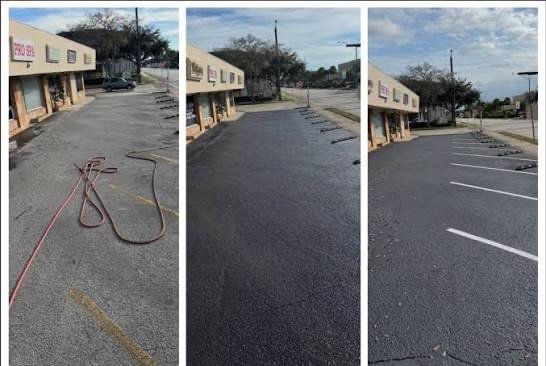
Sealer over prepared asphalt to slow oxidation and water getting into the surface, then a fresh re-stripe once it cures.
- Surface cleaned and prepared before any sealer goes down
- Cracks filled first, sealer alone does not bridge a working crack
- Full re-stripe once the sealer has cured
- Staged so sections of the lot stay accessible
Price my lot
Property type and rough stall count is enough, most lots are priced without a site visit.
Why Fine Stripes for Parking Lot Sealcoating
Asphalt fails from the top down. Sun oxidizes the binder, water works into the surface, and the lot goes grey and brittle before it starts breaking up.
Sealcoating puts a barrier over prepared asphalt to slow that down. It is not a repair, a working crack has to be filled first, or it comes straight back through the sealer within a season. We fill, then seal, then re-stripe once it has cured.
Asphalt is stone held together by bitumen, and the bitumen is the part that ages. Ultraviolet and oxygen break the binder down at the surface, fines wash out, the exposed stone starts to loosen, and a black lot goes grey and then brittle. Sealcoating puts a sacrificial layer over the top to slow that down. It does nothing for the structure underneath.
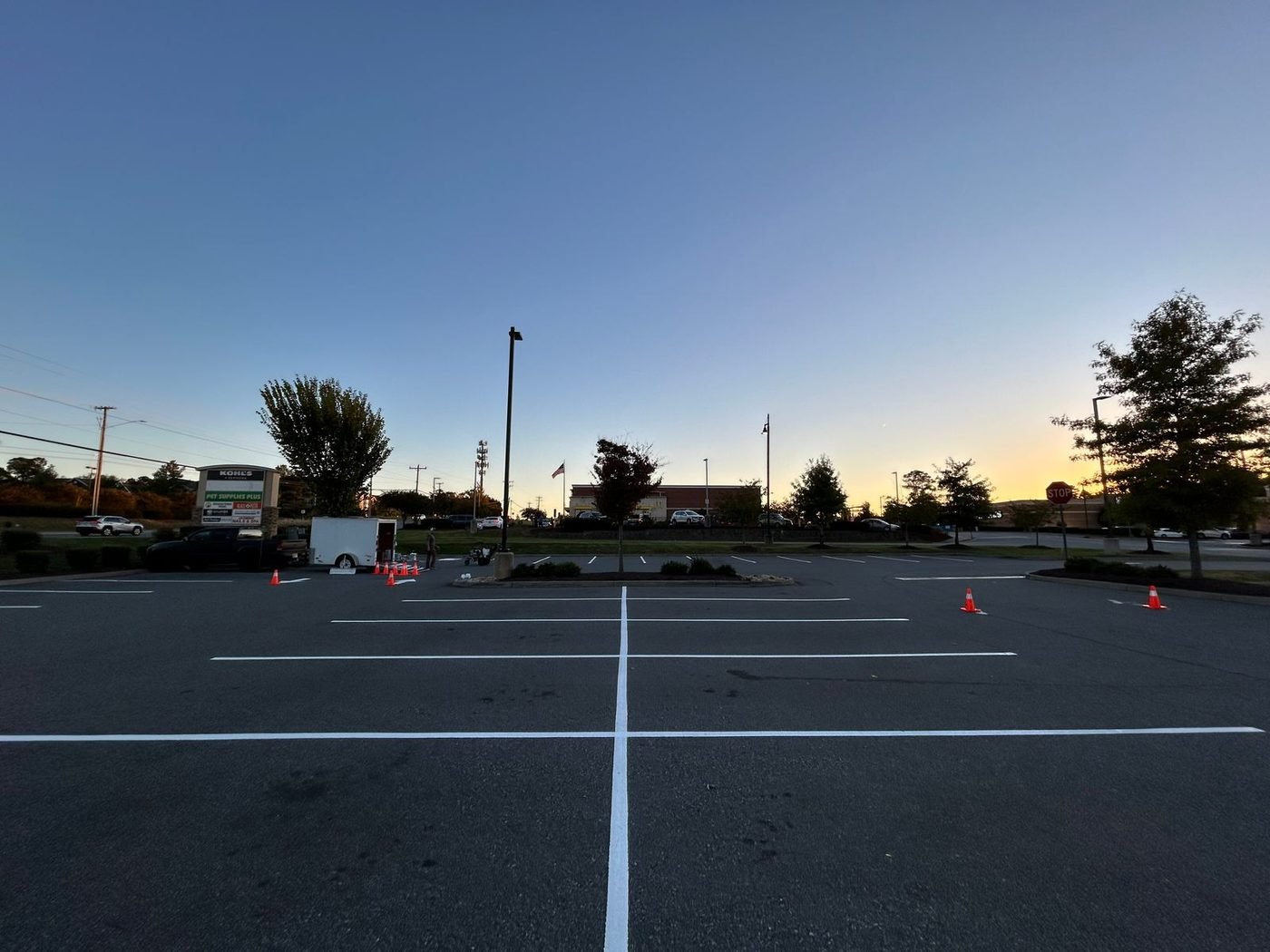
Striping goes back on after the sealer has cured, so a lot getting both is quoted as fill, seal, cure, then stripe.
The sequence, start to finish
Preparation takes longer than the application. It also matters more. The lot gets blown and swept, or washed where the grime has bonded to the surface, edges and curb lines cut back where dirt and vegetation have crept in, and the surface checked for whatever will ruin a coat. Standing water. Loose or raveled areas. Oil.
Oil and fuel spots want treating separately. Petroleum dissolves the bitumen it lands on, so asphalt under a long-standing drip is already softened, and sealer straight over the top lifts within weeks and leaves a bare ring. Those get cleaned, then treated with an oil spot primer so the sealer has something to hold.
Cracks are filled before anything else goes down. Sealer is a thin coating and cannot bridge a joint that is still moving, so sealing over an unfilled crack hides it until the first temperature swing opens it back through the new surface. Low spots that hold water may want mastic or a patch. A puddle sitting on fresh sealer for two days thins it and wears it off first.
Application is squeegee, broom or spray, and most jobs use some combination. Squeegee and broom work material into the surface texture and give the better bond, which is why they get used for a first coat and on rough or porous asphalt. Spray covers ground faster and looks more even, so it suits a second coat over a surface already sealed. Edges, curb lines and anything around an obstruction get cut in by hand whatever is happening on the open lot.
More about parking lot sealcoating
Materials, and how a mix goes wrong
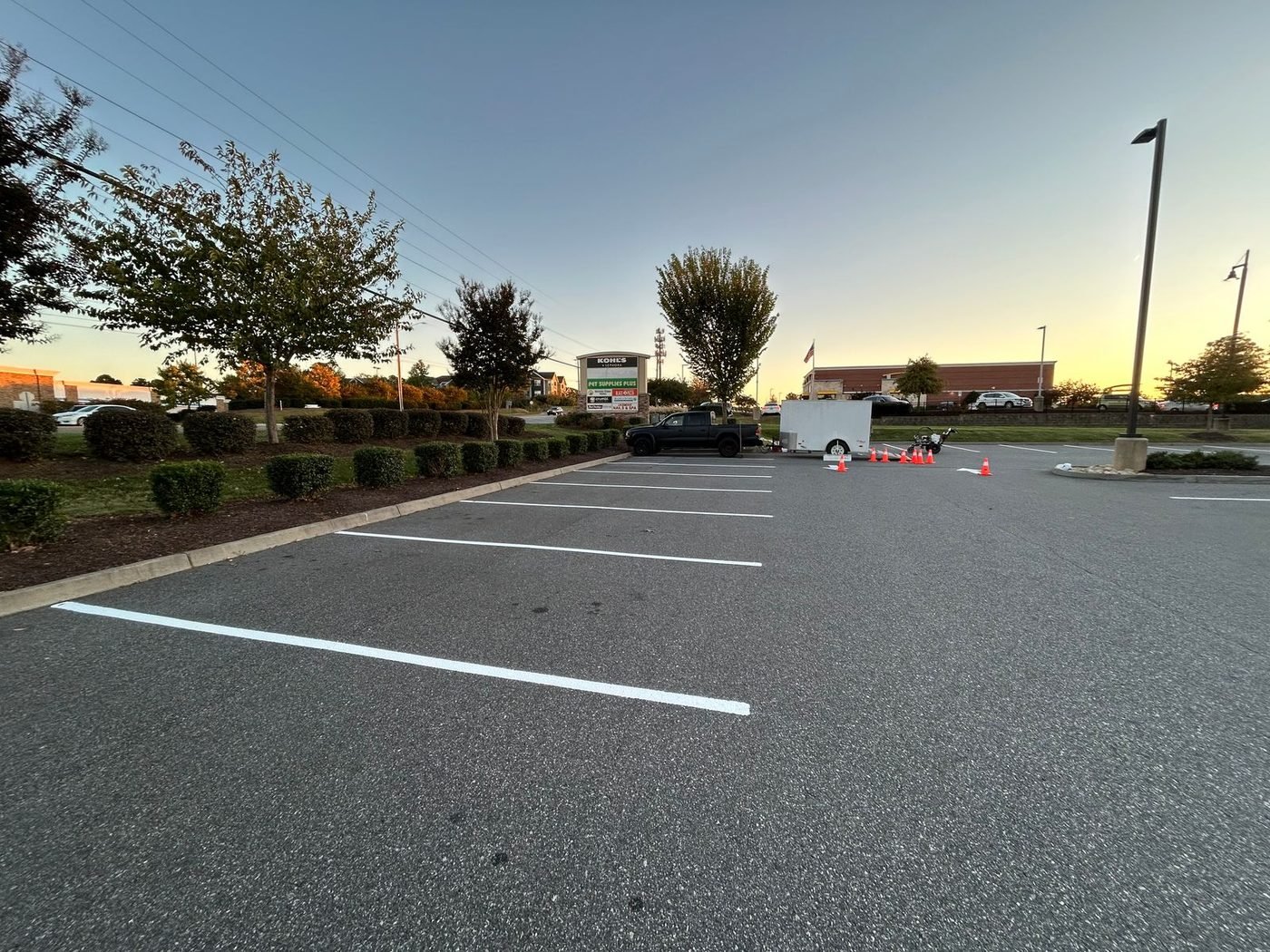
Common sealer types are refined tar emulsion, asphalt emulsion, and petroleum-based polymer modified products. Availability differs by jurisdiction, some local authorities restrict coal tar based products, so the right answer for a given lot depends on what is permitted where you are, the condition of the surface, and how much fuel spillage it sees.
Whatever the base product, sealer ships as a concentrate and gets mixed on site with water, sand and sometimes an additive. The manufacturer publishes exactly how much of each. That mix design is where most sealcoating jobs are won or lost, and it is invisible once the material is on the ground.
Over-dilution with water is the classic corner cut. It spreads further, covers more square footage per drum, looks black and glossy for a couple of weeks, then wears back to grey inside a season. Sand is what gives the surface texture and wear resistance, so a coat mixed short of sand is slick when wet and thin under traffic. Neither of those shows up on the day you write the check.
More coats are not automatically better. Sealer applied repeatedly without wearing down builds a thick brittle film that eventually cracks in a fine web across the whole surface, and that has to come off rather than be covered. Two coats on a properly prepared lot at the correct spread rate is the normal specification.
| Corner cut | How it looks on the day | What it costs you later |
|---|---|---|
| Over-diluted with water | Spreads further, black and glossy for a couple of weeks | Wears back to grey inside a season |
| Mixed short of sand | Indistinguishable at handover | Slick when wet, thin under traffic |
| Extra coats sold as a bonus | Looks generous | A thick brittle film that cracks in a fine web and has to come off, not be covered |
Weather, cure and the calendar
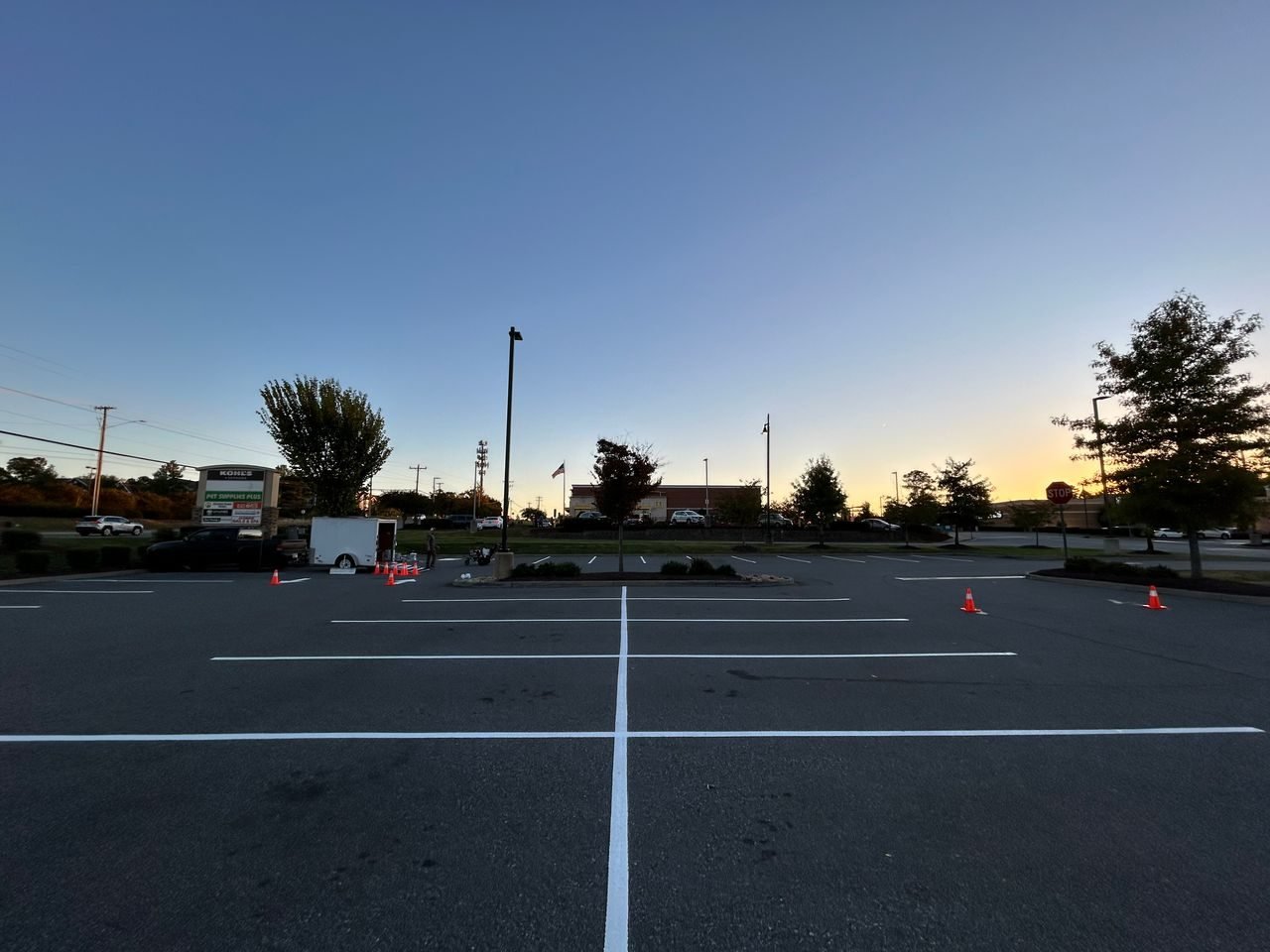
Sealer cures by losing water to the air. It wants surface and air temperature above the manufacturer minimum and rising, and a dry window well past the point where the surface looks dry. A shower a few hours after application can wash an uncured coat into the storm drain.
Charlotte summers give plenty of warm days and interrupt them reliably. Storms build fast in the afternoon and half the time are nowhere in the morning forecast, so sealcoating here tends to be a morning trade with a hard stop, and crews watch radar rather than the printed forecast. Humidity stretches cure time even on a hot day. At the other end of the year, cool nights and heavy dew limit how late in the season a coat can go down safely, however warm the afternoon felt.
Newly paved asphalt has to release its surface oils before it will take sealer at all. That waiting period is set by the sealer manufacturer and the paving contractor and it is measured in months, not days. Sealing new asphalt early does not protect it, it just produces a coat that never bonds.
Staging on a working property
A sealed section is out of use longer than a striped one. Traffic cannot go back on until the coat has cured, and striping cannot go on until after that, so the honest sequence for a full lot is fill, seal, cure, stripe. Usually across more than one visit, and worth saying out loud at quote stage rather than discovering on the day.
Most sites get done in halves or quarters with barricades rather than cones, because a car driven across curing sealer leaves marks that do not come out and the driver takes the material home on their tires. Where a property genuinely cannot give up a section during trading hours the work moves to a weekend. Somewhere with a lot of turning traffic in one spot, a drive-through lane or a delivery apron, will show power steering scuffs in the first few weeks even on a good coat. That settles as the surface hardens.
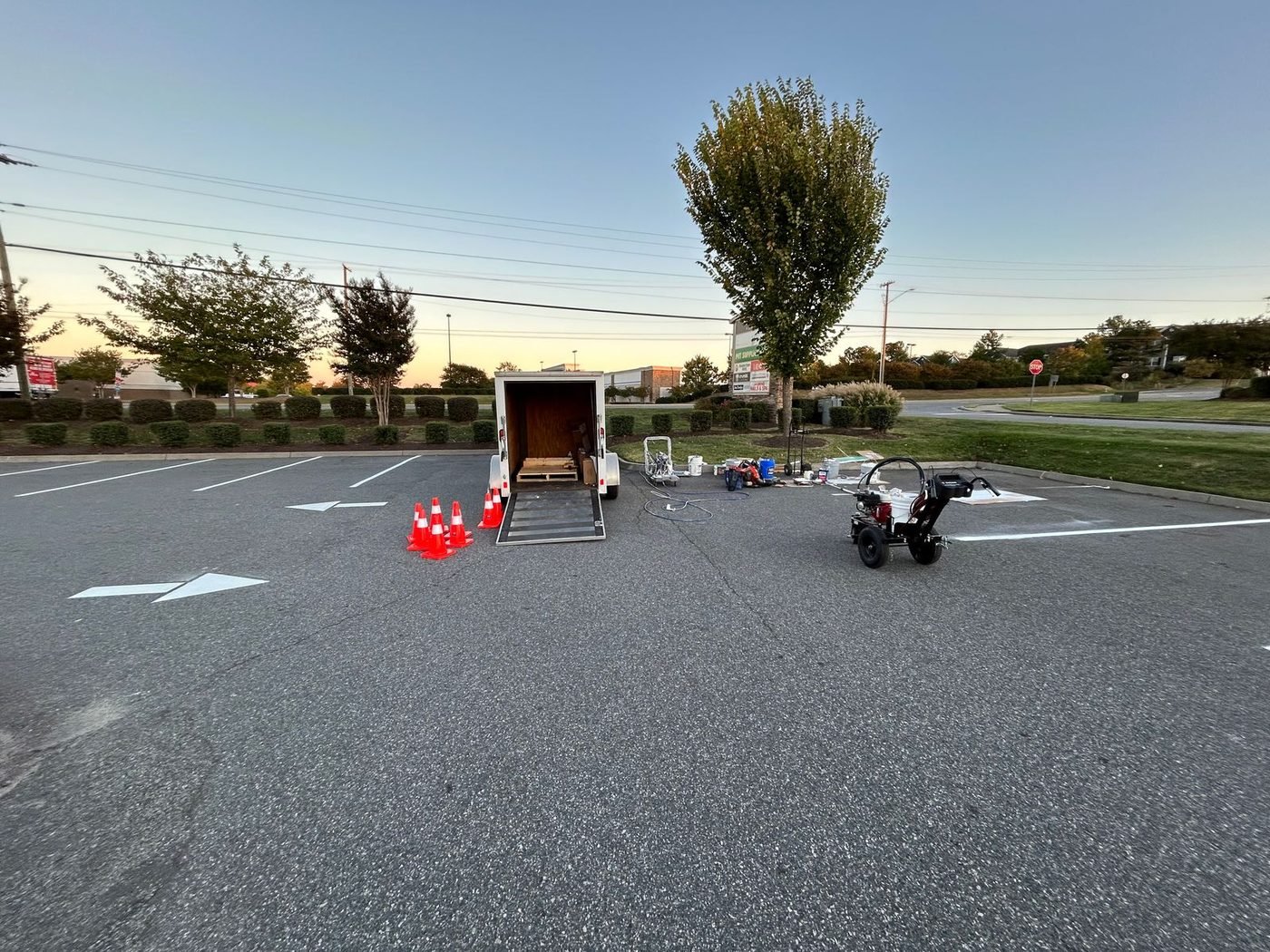
A lot is staged in halves or quarters so there is always somewhere to put a car while a section cures.
Signs the job was done badly
- Grey patches inside the first season. Usually over-dilution, or a spread rate below specification
- Bare rings where the oil spots were, so the spots were never primed
- Cracks back through the new coat within months. Sealed over instead of filled
- A slick surface when wet, which points to a mix short of sand
- Tracking onto entrance mats and into the building. Lot reopened too early
- Fine web cracking across the whole surface, a coat built up too thick over too many applications
More about what to insist a quote states
What to insist a quote states
- The product name, so somebody can pull the technical data sheet
- The mix design. Water, sand and additive per unit of concentrate
- Number of coats and the intended spread rate
- Application method for the open lot, and separately for the edges
- Crack filling and oil spot priming, included or excluded
- Is striping included afterwards, and how long after
- Cure time before traffic, and the sectioning plan that goes with it
Questions worth putting to a contractor
- Does this lot actually need sealing yet, or is the surface still sound?
- Which areas would you patch instead of seal, and what happens if we leave them?
- How many square feet per drum are you working to, and where does that number come from?
- What is the plan if a storm comes through two hours after you finish?
- When the lot gets re-striped afterwards, are the accessible spaces going back exactly as they were, or corrected? A car space wants 96 inches with a 60 inch access aisle, and a re-seal is the cheapest moment to fix a layout that has drifted
A contractor willing to tell you the lot can wait another year is generally the one to keep. Sealcoating on the wrong cycle is money spent early rather than money saved.
From your first message to the cones coming up
What actually happens after you send the form, in the order it happens.
-
Step : 01
Tell us about the lot
Property type, roughly how many stalls, and what needs doing. Most re-stripes are priced from that alone. For a straightforward lot nobody needs to come out before you have a number.
-
Step : 02
You get a number, and an order of work
The sequence matters more than the date. Cracks get filled before sealer goes down, and striping goes last once the surface has cured, so a full lot is usually more than one visit. That gets agreed up front rather than discovered on the day.
-
Step : 03
A window that suits the site
Days, nights or weekends. A lot that cannot give up parking during trading hours gets an out-of-hours slot; one with room to work gets coned into sections so part of it stays open throughout.
-
Step : 04
The lot gets walked first
Ideally with whoever manages the property. An oil-soaked patch by the bin store, a low spot that holds water, a section starting to ravel, wheel stops knocked out of position, parts of the layout that were wrong before anyone repainted them. Better to agree all that standing on the asphalt.
-
Step : 05
Surface prep, which is most of the job
Blowers for loose grit, brooms along the curb line where dirt compacts, oily patches treated separately. Paint will not hold on contaminated asphalt however good the paint is, and dust is the ordinary reason a new line peels off in sheets a few months later.
-
Step : 06
Layout, paint, then a walkthrough
The layout is chalked and masked before any paint goes down, measured out rather than copied off faded lines. Traffic-grade paint goes on last at a steady walking pace, and the finished markings get walked with you before the cones come up.
Paint is walk-on dry quickly and takes traffic within a few hours. Most standard lots are done in a single visit, and you get a specific window for your lot and the weather on the day.
See what customers say on Google
Our Google Business Profile carries our reviews, photos and service area, straight from Google, not retyped onto this page.
What customers wrote on Google
“Fine Stripes exceeded our expectations on our parking lot project. The new striping, handicap spaces, and directional arrows look excellent and have greatly enhanced the property. Their work was professional, efficient, and high quality. We’ll absolutely be using them again.”
J.J. Foley 11 months ago
“We had our parking lot repainted recently and the results were outstanding. The lines are crisp, straight, and make the lot look brand new. Customers have even commented on how much easier it is to park now.”
Gabriella Polito 10 months ago
“Excellent service from the folks over at Fine Stripes. They completely refreshed our lot, crisp clean lines, quick turnaround time, and excellent customer service. The team was very professional and quick to answer any question I may have had as well.…”
Tre Berry 11 months ago
“Great experience with Fine Stripes of Charlotte! They show up on time, work fast, and the lines look super clean and professional. They can make your lot look brand new and way more organized.…”
Brandon Davidson Charlotte 11 months ago
“They did an excellent job with the sealcoating and striping at our new build out in Ballantyne. The property looks brand new again. Team was easy to work with. Will be using them again.”
Cameron Cartwright Ballantyne a month ago
“Fine Stripes did the striping and sealcoating for our Fifth Third Bank location in Midtown Charlotte. Super high quality work that was completed very quickly. Everything was a breeze The traffic flows so much better now and no one is confused with the layout anymore.”
C.A Photos and Dresses Midtown Charlotte a month ago
Common questions
How often should a lot be sealcoated?
It depends on traffic, sun exposure and how the lot drains. The honest answer is that it is driven by the condition of your surface rather than a fixed calendar, so we will tell you what we see when we look at it.
Does sealcoating fix cracks?
No. Sealer is a surface coating. Working cracks need filling first, otherwise they telegraph straight back through. We fill and then seal.
How long before we can drive on it?
Sealer needs to cure before traffic, and striping goes on after that. We plan the sequence around your trading hours and give you the timings up front.
Where we work
Charlotte and the surrounding metro, into the South Carolina border towns.
Price my lot
Tell us the property and roughly how many stalls, and you'll get a number back, no site visit needed for most re-stripes.
Prefer to talk? (704) 741-9893
24/7 crew availability