Commercial Pressure Washing in Charlotte, NC
Surface cleaning for commercial lots and concrete, and the preparation step that decides whether a coating actually bonds.
- Lot, sidewalk, dumpster pad and loading apron cleaning
- Oil and grease treated with a degreaser and dwell time, not just pressure
- Surface cleaner rather than a wand on open asphalt, so the surface is not etched
- Run ahead of sealcoating or striping, with drying time built into the schedule
Price my lot
Property type and rough stall count is enough, most lots are priced without a site visit.
Why Fine Stripes for Pressure Washing in Charlotte, NC
A commercial lot gets dirty in ways a broom does not fix. Tire rubber worn into the turning points, algae on the shaded edge, the black film that builds along a curb line, and oil under wherever vehicles sit longest.
Most of the time we are cleaning because something else is going on afterwards. Paint and sealer are coatings, and a coating is only as good as its bond to the surface underneath, so the wash is what decides whether the work above it lasts.
Asphalt takes much less pressure than concrete does. Too much strips the binder out from between the stones and leaves a rough, pale patch that does not come back, so the work is done with the right chemical and enough dwell time rather than by turning the machine up.
On a striping company’s site, surface cleaning is mostly a story about adhesion. Paint and sealer are coatings, and a coating only lasts as long as its bond to whatever is underneath it. Almost every line that peels off a lot in sheets a few months after it was painted came off something that was never properly clean.
Cleaning as preparation, not as a finish
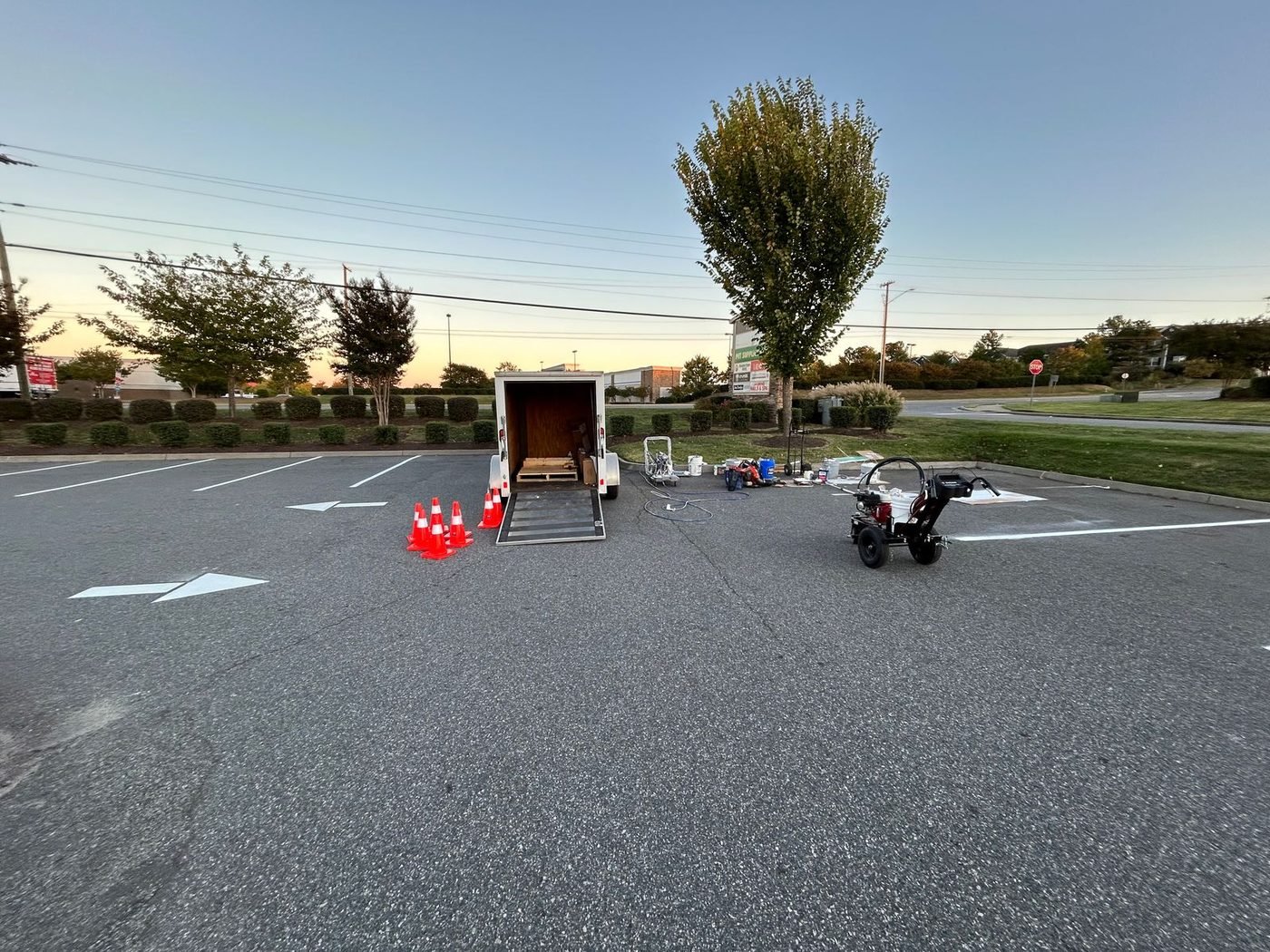
There is a version of this service that is about appearance, and it is real enough. A grey lot with black streaks down the drive lane looks neglected whatever condition the asphalt is in, and the entrance is the first thing a tenant’s customers see. But the cleaning that actually changes the outcome of a job is the cleaning that happens before something else goes down.
Blowers and brooms handle loose grit, and on most re-stripes that is enough. Washing earns its place where contamination has bonded to the surface rather than sitting on it. Tire rubber worn into a turning point. Algae and mildew on a shaded north edge. The black film that builds along a curb line where dirt compacts and never dries out. Those do not blow off, and paint over them is paint on a release layer.
More about pressure washing in charlotte, nc
Oil, and why it is a different problem
Petroleum dissolves the bitumen that holds asphalt together, so a spot that has been dripped on for a year is not merely dirty, it is softened. Pressure alone drives the oil deeper rather than lifting it out. What works is a degreaser given time to sit and pull the contamination back to the surface, then rinsing, and on stubborn areas heat, because hot water moves grease that cold water pushes around.
Even then some spots do not come fully clean, and that is worth saying before the work rather than after. Where sealer is going down afterwards, a stubborn spot gets treated with an oil spot primer so the coating has something to hold. Where paint is going down, a stall line is usually moved a few inches rather than run through a patch that will not hold it.
Pressure is not the setting that matters most
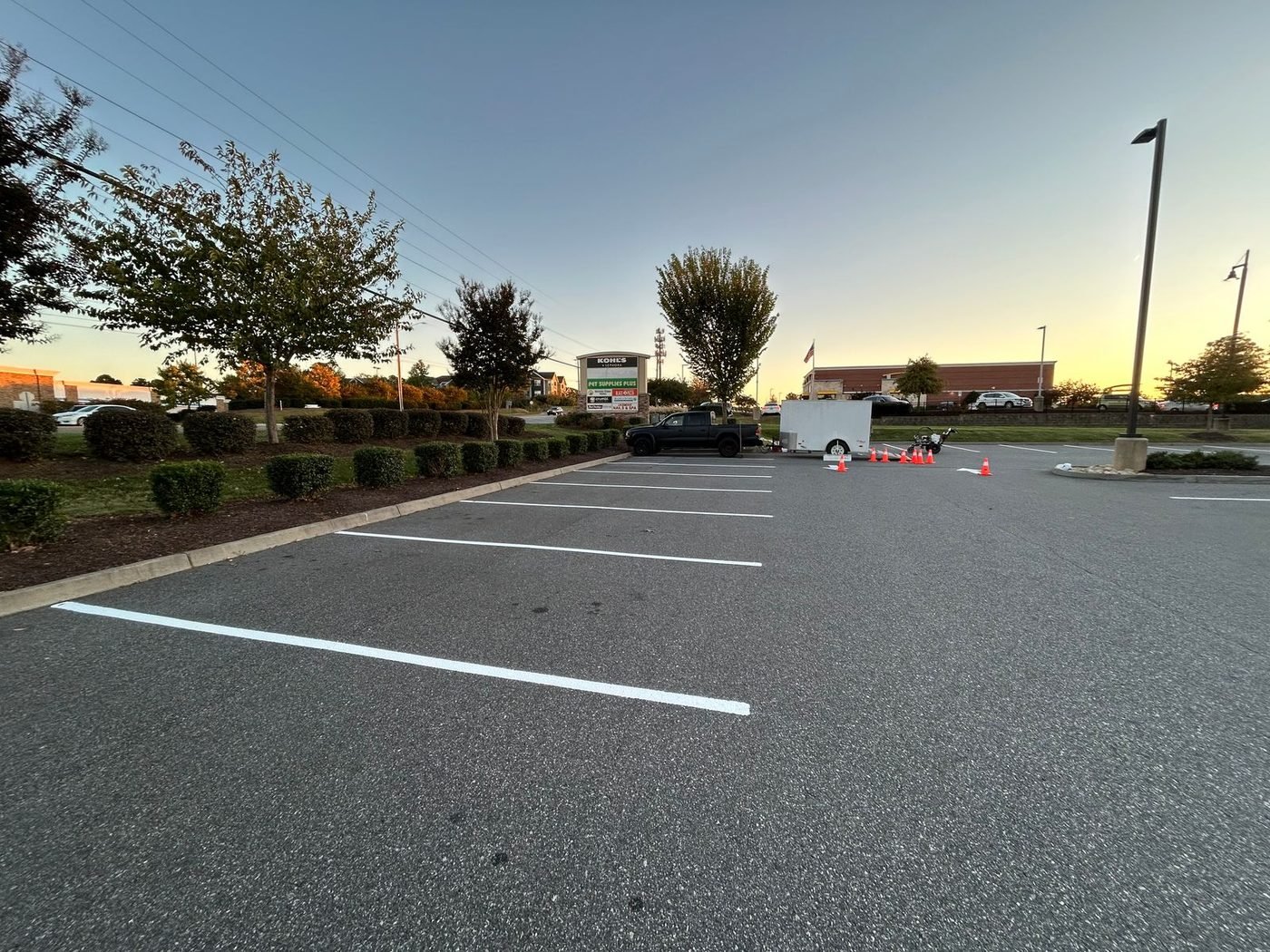
Asphalt tolerates far less pressure than people expect. Turn it up and the water starts stripping binder out from between the stones, leaving a lightened, rough patch with the aggregate standing proud. That damage is permanent, it is very obvious once the lot dries, and it happens fastest exactly where somebody is trying hardest, on the stain that will not shift.
What does the work is a combination of the right chemical, enough dwell time for it to act, water hot enough to help, and a surface cleaner rather than a wand. A wand concentrates everything into a narrow fan that a careless operator holds too close and too long, which is what produces the striped, etched look on a badly washed lot. A rotating surface cleaner spreads the same energy across a wide head at a fixed height and leaves an even result.
Concrete is a different substrate and takes more. Sidewalks, dumpster pads, loading aprons and entrance walkways are usually the areas that respond best, which is why a wash quote for a commercial property often covers more concrete than asphalt.
What has to be settled before a crew turns up
Three practical things decide whether a wash day runs smoothly, and none of them is about the equipment.
Water. A commercial lot uses a lot of it, so somebody has to confirm there is a working spigot on the property and that the crew is allowed to use it, or the water gets brought in and that changes the quote.
Drainage. Where the runoff goes matters, and it is a question for the property rather than an assumption. Some sites drain to landscaping, some to a storm inlet, some to a sanitary connection at a wash pad. Settle it with the property manager in advance rather than discovering it with a hose already running.
Access and timing. Cleaning is wetter and slower to clear than striping, and a washed area stays wet long after the crew has moved on. Surfaces that are being coated afterwards have to dry fully before anything goes down, which is what usually turns a wash and seal into a two-visit job.
| Settle in advance | The question | Why it changes the job |
|---|---|---|
| Water | Is there a working spigot on the property, and is the crew allowed to use it? | If not, water gets brought in, and that changes the quote |
| Drainage | Where does the runoff actually go: landscaping, a storm inlet, or a sanitary connection? | A question for the property, not an assumption to discover with a hose already running |
| Access and timing | How long can the area stay wet, and what happens on it next? | Surfaces being coated afterwards must dry fully first, usually what turns a wash-and-seal into a two-visit job |
Where it fits in the order of work
Cleaning comes first, always. After that the sequence is the one every other job on this site runs to: fill the cracks, seal the surface, let it cure, then stripe. Washing a lot after it has been striped is fine as maintenance, though it wants a lighter touch, because the same pressure that lifts a stain will lift a line.
The one case where washing changes the plan rather than fitting into it is a lot somebody is about to seal that has never been cleaned properly. A sealer coat over an unwashed surface is money spent on a coating that is going to release, and that is a conversation worth having before the drums arrive rather than a year later.
What a badly washed surface looks like afterwards
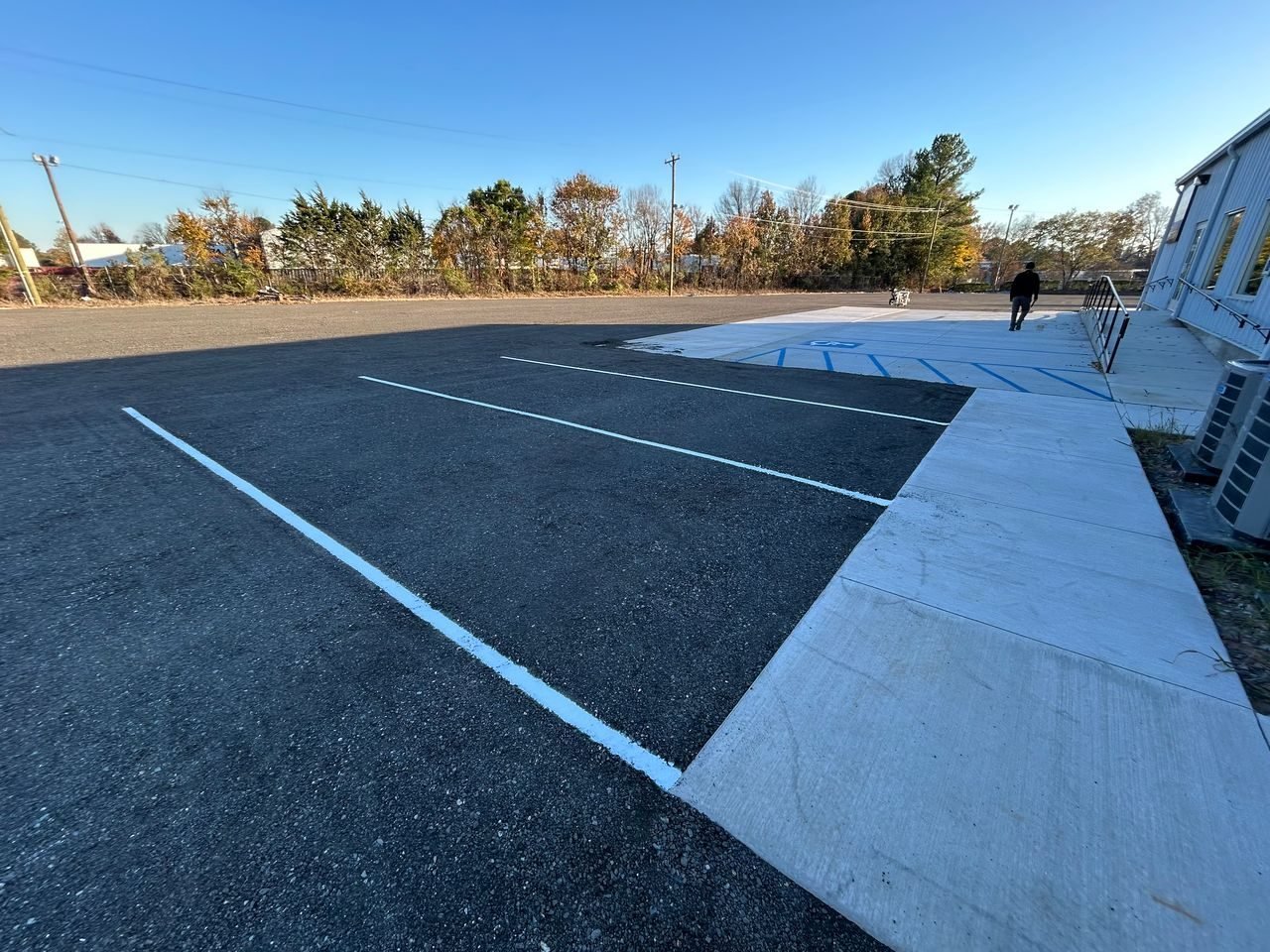
- Light etched bands across the asphalt, wider at one end, which is a wand held too close and swung in an arc
- Exposed aggregate standing proud in patches, where binder has been stripped out by too much pressure
- A clean strip down the middle of a drive lane and a dirty margin either side, meaning nobody overlapped the passes
- Streaks that reappear as the surface dries, so the contamination was pushed around rather than lifted
- Oil spots that look clean wet and reappear dry
- Debris and silt left in the gutter line or over a storm inlet after the crew has gone
More about reading a surface cleaning quote
Reading a surface cleaning quote
- Square footage, and whether asphalt and concrete are priced separately, because they are different work
- Hot water or cold, and whether a degreaser is included or charged as an extra
- Surface cleaner or wand for the open areas
- Oil spots called out individually, with an honest statement of which ones may not come fully clean
- Who supplies the water, and what happens if there is no usable spigot
- What happens to the runoff and to the debris the wash leaves behind
- If a coating is going on afterwards, how long the surface has to dry first and whether that is a second visit
Questions worth asking before booking
- Does this lot actually need washing, or would blowing and sweeping do the same job for the work we are planning?
- Which stains do you expect to shift, and which are you telling me now will not come out?
- What pressure are you working at on asphalt, and how do you keep from etching it?
- Where does the wash water go on this property, and is that arrangement agreed with whoever manages the site?
- If we are sealing afterwards, how long between the wash and the sealer?
- Are the accessible spaces getting cleaned too? Faded hatching under a layer of grime reads as worn out when it may only be dirty, and that is worth knowing before a compliance re-mark gets quoted
The useful answer to the first question is often no. A contractor who tells you the lot does not need washing before a re-stripe is telling you something about how they price the rest of the work too.
From your first message to the cones coming up
What actually happens after you send the form, in the order it happens.
-
Step : 01
Tell us about the lot
Property type, roughly how many stalls, and what needs doing. Most re-stripes are priced from that alone. For a straightforward lot nobody needs to come out before you have a number.
-
Step : 02
You get a number, and an order of work
The sequence matters more than the date. Cracks get filled before sealer goes down, and striping goes last once the surface has cured, so a full lot is usually more than one visit. That gets agreed up front rather than discovered on the day.
-
Step : 03
A window that suits the site
Days, nights or weekends. A lot that cannot give up parking during trading hours gets an out-of-hours slot; one with room to work gets coned into sections so part of it stays open throughout.
-
Step : 04
The lot gets walked first
Ideally with whoever manages the property. An oil-soaked patch by the bin store, a low spot that holds water, a section starting to ravel, wheel stops knocked out of position, parts of the layout that were wrong before anyone repainted them. Better to agree all that standing on the asphalt.
-
Step : 05
Surface prep, which is most of the job
Blowers for loose grit, brooms along the curb line where dirt compacts, oily patches treated separately. Paint will not hold on contaminated asphalt however good the paint is, and dust is the ordinary reason a new line peels off in sheets a few months later.
-
Step : 06
Layout, paint, then a walkthrough
The layout is chalked and masked before any paint goes down, measured out rather than copied off faded lines. Traffic-grade paint goes on last at a steady walking pace, and the finished markings get walked with you before the cones come up.
Paint is walk-on dry quickly and takes traffic within a few hours. Most standard lots are done in a single visit, and you get a specific window for your lot and the weather on the day.
See what customers say on Google
Our Google Business Profile carries our reviews, photos and service area, straight from Google, not retyped onto this page.
What customers wrote on Google
“We’ve worked with Zach and Tyler at Fine Stripes on several commercial parking lot striping jobs around Charlotte, NC, and they’re awesome to work with. Super professional, easy to reach, and always show up when they say they will.…”
Beverly Charlotte 9 months ago
“Zach and his team did a great job with lining my small parking lot. They were very efficient with their time and the lines look absolutely perfect. Zach was great at communicating with me throughout the entire process. I would recommend them to anyone!”
Kelsey Miles 9 months ago
“Upon hearing that I had some way over do striping work that I needed to get done, a general contractor friend of mine referred me to Fine Stripes.They gave me a fair quote, and showed up when they said they would. They did an amazing job, will definitely use again in the future”
Amanda Redfearn 2 months ago
“Highly impressed with Fine Stripes. They refreshed all our parking spaces, added ADA markings and made the lot look brand new. Friendly crew, fast service and excellent results.”
Alan Burns 11 months ago
“Fine Stripes exceeded our expectations on our parking lot project. The new striping, handicap spaces, and directional arrows look excellent and have greatly enhanced the property. Their work was professional, efficient, and high quality. We’ll absolutely be using them again.”
J.J. Foley 11 months ago
“We had our parking lot repainted recently and the results were outstanding. The lines are crisp, straight, and make the lot look brand new. Customers have even commented on how much easier it is to park now.”
Gabriella Polito 10 months ago
Common questions
Will pressure washing damage the asphalt?
It can, and that is the thing to ask any contractor about. Asphalt tolerates much less pressure than concrete does, and too much water pressure strips binder out from between the stones and leaves a rough, lightened patch that does not go back. The work is done with the right chemical and enough dwell time rather than by turning the pressure up.
Do oil stains come out completely?
Not always, and anyone promising otherwise has not looked at the spot. Petroleum softens the asphalt it soaks into, so a long-standing drip has changed the surface as well as marked it. A degreaser left to work will lift most of it. Where sealer is going down afterwards, what is left gets treated with an oil spot primer so the coating still bonds.
Does the lot need washing before it is striped?
Sometimes, not always. For most re-stripes, blowing and sweeping is enough and washing would be an unnecessary line on the quote. It earns its place where contamination has bonded to the surface rather than sitting on it, tire rubber at a turning point, algae on a shaded edge, or the compacted film along a curb line.
How long after washing can the lot be sealed or striped?
The surface has to be fully dry, not just dry to the eye, which usually makes washing and coating two separate visits rather than one long day. We give you the actual sequence and timings for your lot rather than a general figure.
Where we work
Charlotte and the surrounding metro, into the South Carolina border towns.
Price my lot
Tell us the property and roughly how many stalls, and you'll get a number back, no site visit needed for most re-stripes.
Prefer to talk? (704) 741-9893
24/7 crew availability